
Most landlords have never thought carefully about what happens when a resident gets locked out at 10 PM on a Saturday, a pipe bursts while the property is vacant, or we need emergency access to address a safety issue before it escalates into a five-figure repair. In all three cases, the answer either costs you money and time, or it doesn't.
We strongly recommend mounted lockboxes on all properties we manage, and we want to explain exactly why that decision benefits everyone involved.
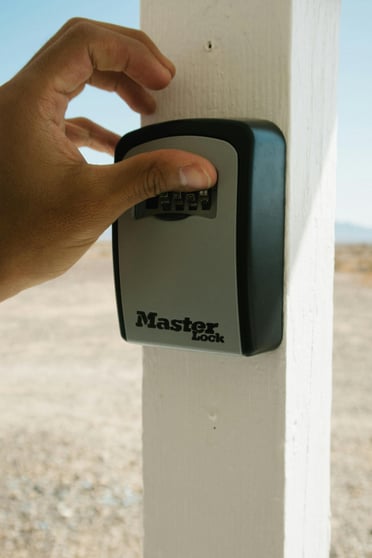
The Math on a Locksmith Call
A standard residential locksmith call runs $100 to $250, depending on the time of day, the day of the week, and your market. After-hours or weekend calls routinely land at the top of that range or beyond it. That single bill is often more than the lockbox itself costs, and it solves nothing structurally. The resident can get locked out again next month, and you're right back to the same cost.
When we provide a mounted lockbox through our program, the one-time hardware cost pays for itself after a single avoided locksmith dispatch. Over a typical 2-year tenancy, even one lockout event per year means the lockbox has already returned two to five times its cost while removing a frustrating, disruptive situation from everyone's plate.
What the Lockbox Actually Solves
Resident Lockouts. This is the most common use case, and the one that tends to create the most friction in the landlord-resident relationship. A locked-out resident has one of three options without a lockbox: call a locksmith at their own expense, call us to arrange emergency access (which takes time and coordination), or sit outside waiting. None of these is a good outcome. With a lockbox in place, we can provide temporary access quickly and professionally, without anyone paying emergency service rates for a preventable situation.
Emergency Access During Vacancy. A vacant property is a liability that costs roughly $60 to $100 per day in lost rent, and that doesn't account for the damage that can accumulate when no one is monitoring a home. A burst pipe during a vacancy, undetected for even 48 hours, can generate $5,000 to $20,000 in water damage costs depending on the extent of the spread. When our operations team needs to access a vacant property for an inspection, a showing, or an emergency response, a mounted lockbox means we can act immediately rather than waiting on a key exchange or a vendor coordinator to locate the right set of keys.
Owner and Vendor Access. Our operations staff conduct regular home visits, coordinate vendor access for maintenance, and manage turnover workflows between residents. When access doesn't depend on physically locating a key, vendors get in faster, scheduling delays shrink, and work gets done sooner. For owners, that means quicker turnarounds, fewer delays between a reported issue and a completed repair, and less time your property sits in limbo waiting on a coordination problem to resolve.
Genuine Emergencies. Fire departments, emergency responders, and our own staff sometimes need to enter a property immediately. In those situations, the difference between having an accessible lockbox and not having one can mean the difference between a recoverable situation and a catastrophic one. This is not theoretical. It happens.
Why This Matters for Residents Specifically
There is a common assumption that lockboxes are purely an owner or manager convenience. That misses the more important story. Residents benefit directly from having a lockbox on their home for reasons beyond lockout situations.
When a maintenance vendor can access the property without scheduling gymnastics, repairs happen faster and the work order closes sooner. When our team can respond to an emergency without delay, your property gets protected before a minor issue becomes a costly one. When we can coordinate access smoothly, vendors accomplish more in a single visit rather than making multiple trips — meaning less disruption for your resident and a better-managed property overall.
We are unambiguous with our residents: the lockbox does not grant us routine access to the home without proper notice. It exists to serve the access needs of everyone, including the person who lives there. A quality resident who trusts their management company should see a lockbox as a feature, not a concern.
A Note on Security
A mounted lockbox might raise an eyebrow at first glance, but the concern is usually based on the flimsy realtor boxes people picture. The lockboxes we install are tamper-resistant, weather-rated, and mounted to a fixed surface. Access codes are managed exclusively by our team and can be changed during every vacancy period.
We have used lockboxes across our portfolio for years without a single documented security incident tied to one. What we have documented is faster emergency response, smoother vendor coordination, and residents who appreciate a management team that can handle access problems quickly.
Getting Your Lockbox Through MoveZen
A mounted lockbox is an optional add-on, and we strongly encourage every owner to take advantage of it. When you add a lockbox through us, we handle the coordination. We source the hardware, manage the access credentials within our systems, and ensure it is properly installed. You are not paying locksmith markups on top of hardware costs, and you are not troubleshooting compatibility issues on your own. The process is straightforward, and the payoff begins with the first avoided emergency.
This is the kind of small infrastructure decision that compounds quietly over a 5- or 10-year hold period. There is no dramatic ROI chart to show here, but the math is simple: one avoided locksmith call at 11 PM on a Sunday, or one burst pipe caught 6 hours faster because we could access a vacant home immediately, repays this investment many times over.
We set these things up because they work, and because both the people who own these homes and the people who live in them deserve a management operation that handles access intelligently.
Ready to Add One?
Our install cost comes in substantially below what any independent vendor or locksmith will quote for the same hardware and labor. If you would like a lockbox installed at your property, submit a request through the link below, and we will take it from there!
In-House Maintenance Service Request Form