
A Couple of Really Important Final Notes
Quick Checklist of Move In Requirements
It also includes practical move-in checklists we’ve collected over the years that residents consistently find useful.
If you review this once now and again a few days before move-in, you’ll avoid most common problems we see.
There are two big things we want to highlight because they cause the most last-minute stress when they’re missed.
Cleared Funds Must Be Paid in Full Before Move-In
You’ll need to have cleared funds paid in full before your move-in, or at the very latest by your lease start date.
One thing that trips people up is online payments. They can take over a week to fully clear, which is why our accounting team disables advance online payments close to move-in. This is already outlined in a separate email you should’ve received.
If you’re inside that window, no panic. You’ll need to use a PaySlip, which can be paid at Walmart, CVS, or Walgreens. If you need one, just ask and we’ll send it over.
Utilities Must Be Connected
Make sure all utilities are connected before move-in.
Owners place stop orders effective on the lease start date, so utilities will be off unless they’re transferred into your name. Most homes also require gas for heat and hot water, so don’t assume you can skip it without checking.
Waiting until move-in day to handle utilities is a great way to start your lease cold, literally.
In-Person Move-Ins Are Rare
In rare situations, your account manager may schedule an in-person move-in. If that’s the case, it’ll be clearly communicated to you ahead of time. If you haven’t been told otherwise, assume the standard lockbox process applies.

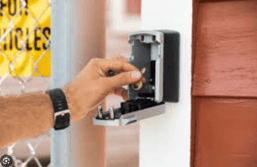
We are also starting to move to using mounted lockboxes that you can use to avoid lockout charges that can be $300 plus.
Once we’ve confirmed:
-
You’re paid in full, and
-
All required utilities are connected
In about 95% of cases, within a day or two of your lease start date, someone (usually your account manager) will send you a lockbox code. That code gives you access to the key, and once you’re inside, everything else should be set up for a smooth move-in.
First Thing to Do After Entering the Home
Before unpacking a single box:
-
Test all smoke detectors
-
Test all carbon monoxide detectors
-
Report any non-functioning devices or missing batteries immediately
Carbon monoxide detectors are required if the home has:
-
Gas or propane appliances (not wood)
-
An attached garage
This step isn’t optional and it protects everyone involved.
Utilities: What Must Be Connected Before Move-In
All homeowners place stop orders on utilities unless the lease specifically says otherwise, which is rare. If utilities are not transferred into the resident’s name, they will not be active.
Utilities that must be connected before move-in typically include:
-
Electricity
-
Gas (if applicable)
-
Water
-
Sewer
-
Trash
Cleared or certified funds must also be received in full before keys can be released.
If moving locally, the easiest approach is usually to contact your current providers and request a transfer. They handle most of the work.
Common Utility Providers by Type
Electric
-
With very rare exceptions, Duke Energy serves all of our markets
Gas
-
With very rare exceptions, PSNC serves all of our markets
-
Many inland homes require gas for heat or hot water
-
Even coastal homes sometimes require gas, so confirm early
Water, Sewer, Trash
-
These vary significantly by location
-
Many Triangle-area and Charlotte homes use city services
-
Wilmington and some surrounding areas may use private providers with multiple options
Reviewing the welcome checklist now and again about three days before move-in is strongly recommended.
Media Services (Internet, Cable)
Most areas are served by Spectrum and AT&T, though other options may be available depending on location.
-
Residents are free to choose any provider
-
Account managers can assist with power, gas, and water questions
-
Media services are not handled by management
A quick Google search usually surfaces the best local options.
Utility Stop Order Issues and Fees
Some utility providers do not allow stop orders. When that happens, charges may temporarily hit the homeowner and must then be prorated back to the resident.
When this occurs:
-
Charges are added to the resident ledger
-
A $50 administrative fee applies
This fee is not a profit center. It exists to discourage preventable utility issues that create unnecessary accounting work.
Want a Full Security Deposit Refund?
The most important step, beyond normal care of the home, is completing a thorough move-in inspection.
This inspection establishes the condition of the home at the start of the lease and protects residents at move-out.
Move-In Inspection Tips
-
Be detailed and specific
-
Do not rush through the form
-
Submit it within 10 days of the lease start date
-
This documentation often helps resolve disputes with owners
Photos are strongly encouraged. Free cloud photo storage options are widely available and make this easy.
Helpful Moving Checklists and Resources
These aren’t required, just genuinely useful:
A downloadable move-in inspection form is also available here.
Final Notes
Cleared funds, utilities connected, inspection completed. Those three things eliminate most move-in and move-out problems before they start.
— Customer Service Team